Carpet performance starts the moment the product is unrolled. Even the highest-quality carpet will fail to deliver a long, attractive life if seams are lumpy, edges are unsecured, or padding is inadequate. Professional installation addresses stresses that lead to premature wear, such as improper stretching, poor seam alignment, and incorrect adhesive use. Investing in correct installation up front is the single most effective way to reduce carpet replacement costs with proper installation.
Beyond immediate appearance, correct installation controls how carpet fibers react to traffic, sun exposure, and vacuuming. A correctly installed carpet lies flat, resists rippling, and maintains pile height longer, all of which reduce visible wear. These improvements translate directly into delayed replacement, lower lifetime cost per year, and fewer disruptive renovation cycles for homeowners and businesses.
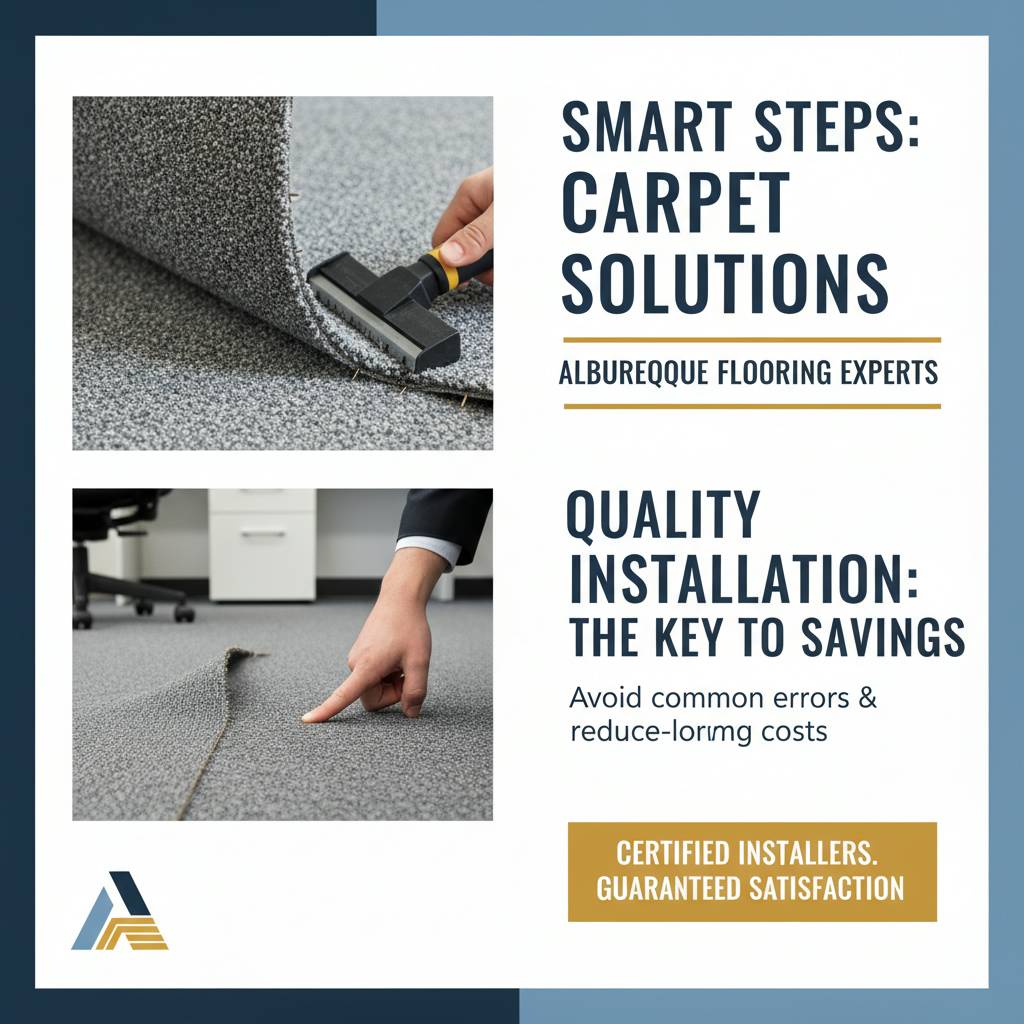 Several recurring mistakes are responsible for a large share of premature carpet failures. Improper seam placement, inadequate tack strip use, and incorrect pad choice are among the top culprits. When seams separate or edges curl, moisture and dirt penetrate more easily, accelerating fiber and backing breakdown. The expense of repairing seams and re-stretching floors can quickly approach the cost of partial replacement when deferred.
Improperly prepared subfloors are another costly oversight. Residual adhesives, uneven surfaces, or subfloor moisture can undermine adhesives and lead to bubbling or delamination. Addressing these issues after the carpet is down is time-consuming and expensive. In many cases, a thorough pre-installation inspection is a small fraction of the future replacement cost but prevents large failures later on.
Consistent attention to five core practices yields the biggest longevity gains: correct subfloor preparation, selection and installation of proper padding, careful seam placement and joining, correct stretching and power-kneeling, and precise edge finishing. Each step reduces mechanical stress on fibers and backing, preserves the original appearance, and limits traps for dirt and moisture that speed deterioration.
Following these practices can significantly reduce the frequency of spot repairs and full replacements. In practical terms, they change carpet performance from reactive maintenance toward predictable longevity, letting owners plan budgets rather than respond to emergencies.
 Padding is not an afterthought. The wrong pad can make a carpet feel uncomfortable and crush fibers faster, while an overly soft pad can cause buckling and an excessively firm pad can make seams stress points. Choose padding rated for the expected traffic, and replace old padding during re-installation to ensure a continuous performance baseline.
Seams are a visual and structural weak point in carpeting, so their placement and joining technique matter. Seams should be positioned in low-traffic lanes or hidden by furniture when possible. Heat-sealed joining or high-quality seam adhesives used by trained technicians reduces the risk of separation. Poor seam alignment can create catch points that accelerate wear and generate unsightly lines over time.
Edge finishing prevents frayed strands and protects against moisture entry at thresholds. Properly installed tack strips and smooth transition strips minimize movement at doorways. Where carpet meets hard surfaces, a well-fitted transition reduces edge stress and reduces the likelihood of early wear along the perimeter, which often requires repair or partial replacement if left unaddressed.
 Even the best installation cannot completely eliminate maintenance. Regular, appropriate care is essential to preserve appearance and postpone replacement. Vacuuming with a quality machine on a recommended schedule, addressing spills quickly, and scheduling periodic professional cleanings all work with proper installation to multiply carpet life. These routines prevent abrasive particles from cutting fibers and reduce trapped moisture that degrades backing.
Establish a simple maintenance plan tailored to the room's use. For moderate residential traffic, vacuuming high-traffic zones several times a week and whole-room vacuuming once per week is often sufficient. For commercial or heavy-traffic residential spaces, daily vacuuming and quarterly professional cleanings extend life significantly. This coordinated approach-installation plus maintenance-forms the basis for measurable cost savings over the carpet's lifecycle.
 Understanding the financial impact of installation choices helps justify higher-quality work. Consider two scenarios: a basic installation that saves on labor and corners cut on padding or seams, and a professional, detail-oriented installation. The basic route may save $75-$200 upfront on labor and materials in some projects but often results in a shorter useful life and higher ongoing repair costs.
| Item | Basic Installation | Quality Installation |
|---|---|---|
| Initial cost (labor materials) | $0-$200 less than premium in many cases | Higher initial cost but matched to manufacturer specs |
| Typical lifespan before replacement | 5-8 years depending on traffic and maintenance | 10-15 years with proper care |
| Mid-life repairs | Frequent seam rework and partial replacements | Minimal repairs; usually pad replacement or deep cleaning |
| Estimated lifetime cost | Higher due to earlier replacement cycles | Lower when amortized over longer useful life |
While exact numbers vary with product quality and usage, this comparison illustrates how spending slightly more for a detail-focused installation often pays dividends by delaying replacement and reducing cumulative maintenance costs.
 A mid-sized family home with pets and kids experienced rapid pile flattening and seam separation after a DIY installation. The homeowner engaged a professional team to re-install with appropriate padding, move seams away from high-traffic corridors, and replace tack strips. The result: the carpet regained its appearance and resisted soiling for years longer than predicted, saving the family thousands in avoided early replacement.
This real-world result reflects a common pattern: careful attention to materials and technique resolves current issues and prevents a cascade of future costs. When owners pair that installation with an improved cleaning schedule, the combined effect is often dramatic in both appearance and cost containment.
National Carpet Installation focuses on installation protocols that target known failure modes. Our teams perform comprehensive subfloor inspections, provide pad recommendations based on traffic analysis, and place seams strategically. We document moisture readings and follow manufacturer guidelines for adhesives and seam methods to preserve warranty coverage and prolong useful life.

Training and consistent quality control reduce variability between jobs. NCI and our installers use calibrated tools and documented checklists so every installation meets both aesthetic and mechanical standards. That consistency is what transforms a one-time installation into a long-term asset rather than a recurring expense.
 Preparing yourself and the space reduces surprises and supports a better outcome. Remove heavy furniture and fragile items, protect adjacent floors, and make installers aware of any pet or allergy concerns. Ask for documentation of moisture tests and pad specifications-these records will be valuable if future warranty questions arise.
If you want to reduce long-term carpet costs and avoid premature replacement, start with the installation plan. Contact National Carpet Installation for a no-obligation consultation and to learn how small upfront investments translate to meaningful lifetime savings. Call 505-555-7733 to schedule an estimate.

For fleet installations, multi-room projects, or historic properties where substrate issues are common, our team can provide a written plan and a transparent cost breakdown so you can compare outcomes, not just prices.
 Proper installation is the single most effective step you can take to reduce carpet replacement costs with proper installation and to protect the look and function of flooring over time. Attention to subfloor preparation, padding selection, seam placement, and edge finishing reduces mechanical stress and delays visible wear. When owners combine professional installation with regular maintenance, the result is a lower lifetime cost, fewer disruptions, and better return on the initial investment.
For tailored guidance and reliable installations backed by experience, contact National Carpet Installation at 505-555-7733. Our team will assess your needs, explain options, and provide an estimate built around lasting performance and value.