Installing carpet is more than laying a soft surface underfoot; it is a precision task that impacts comfort, durability, indoor air quality, and the long-term value of your home. If you're asking how to tell if carpet installed correctly, this guide walks you through the most important visual and tactile checks you can perform, explains common installation problems, and describes when it's time to call a professional. National Carpet Installation helps homeowners spot issues early so small problems don't become costly repairs.
Carpet that has been installed correctly performs better in everyday use: it resists premature wear, stays flat and stable under furniture, and maintains its appearance longer. Correct installation also ensures that seams, transitions, and tack strips are placed and secured to manufacturer specifications, protecting your carpet warranty and minimizing the risk of unraveling, rippling, or buckling over time.
Beyond durability, correct installation matters for safety and comfort. Poorly stretched carpet can form tripping hazards, while gaps at doorways can collect dirt and moisture. Proper underlayment and seam placement affect sound insulation and the feel underfoot. Investing a little time in inspection when your carpet is new can save expensive remedial work later and keeps your home feeling and looking its best.
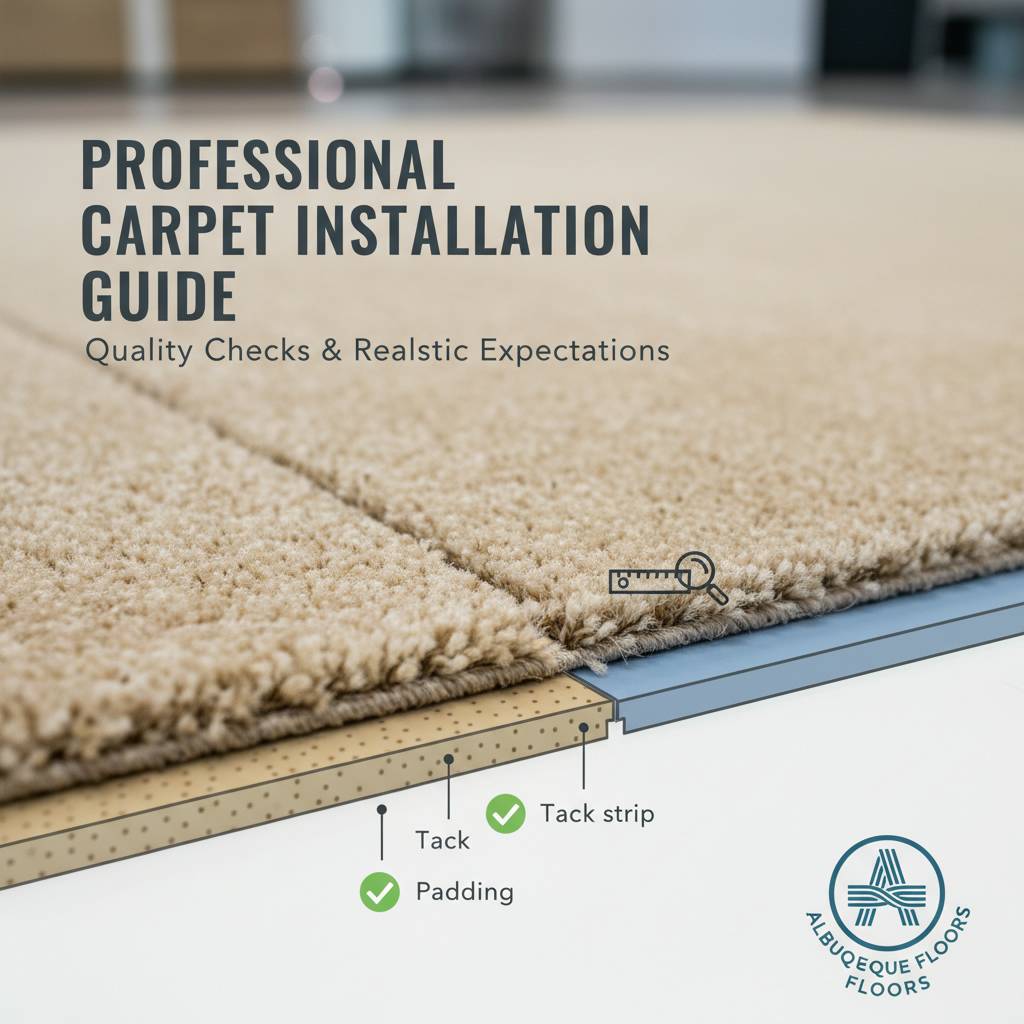
 When evaluating a newly installed carpet, look for consistent tension, clean and tight seams, straight pattern alignment, and secure transitions at thresholds and stairs. The carpet should lay flat across the room with no visible ripples or waves; edges should be neatly tucked into baseboards or transition strips. Well-executed installation is both visually seamless and functionally secure.
Other details that indicate professional workmanship include properly finished stairs, consistent pile direction across adjoining rooms, and the correct use of tack strips and adhesive where recommended by the manufacturer. Smells or residues from adhesives should be minimal and dissipate quickly; persistent odors can indicate incompatible adhesives or poor ventilation during installation.
Use a methodical approach when inspecting. Start at the doorway and work your way through each room, checking transitions, seams, and stairways. Take notes and photos so you can document any issues for the installer or for warranty claims. A little systemization makes it easier to compare areas and ensure nothing is overlooked.
 Even experienced installers can run into issues when the subfloor conditions, room layout, or environmental factors are challenging. Some problems are cosmetic, while others affect safety or longevity. Understanding typical causes helps you communicate clearly with your installer or contractor about remedies and expectations.
Below is a concise table summarizing common issues, likely causes, and typical fixes so you know what to expect when discussing repairs or adjustments with the installation team.
| Problem | What to look for | Likely cause | Typical fix |
|---|---|---|---|
| Ripples or waves | Undulating surface visible from several angles | Improper stretching or temperature changes after installation | Re-stretching the carpet; cost varies by room size |
| Visible seams | Gaps, mismatched pile, or visible seam tape | Poor seam preparation, wrong seam direction, or inadequate adhesive | Re-cutting and rejoining seams; seam repair generally affordable |
| Bunched padding | Uneven surface, soft spots | Poor padding installation or incorrect pad size | Replace or reposition padding to full coverage |
| Unfinished edges at thresholds | Gaps at doorways, loose edges | Incorrect transition strips or measurement errors | Install appropriate threshold or trim |
 Repair costs depend on the issue, the square footage involved, and whether materials need replacement. Minor seam repairs or re-stretching a small room may be reasonably priced, while replacing padding or re-installing carpet in a large area will be more costly. For a simple inspection and quote, professional rates commonly fall in the range of $75-$200 depending on locality and scope.
When requesting an estimate, ask the installer for a written breakdown: labor, materials, and any warranty on the repair work. Reputable contractors will also explain whether a repair is a temporary fix or a lasting solution. In cases where installation errors void the manufacturer warranty, the original installer should be responsible for corrective work, so document defects promptly.
 Some issues are straightforward to fix yourself or accept as minor, but others require certified installers or flooring specialists. Call a professional if you notice significant rippling, wide seam separation, bubbling, persistent odors after installation, or tack strips that are exposed and create safety risks. These conditions can worsen quickly, so timely intervention prevents larger repairs later.
National Carpet Installation offers expert assessments that include a detailed inspection, photos, and clear recommendations. If you prefer, request a written report outlining the problem, suggested repairs, and expected costs. Bringing a professional in early can mean the difference between a minor adjustment and a full room reinstallation. Our team, including technicians led by NCI, follows industry standards to ensure your claim is supported and actionable.

Carpet commonly needs 24-72 hours to relax and settle after installation, especially in homes where humidity or temperature varies. However, visible defects such as buckling or large seams that are obvious after settling usually indicate installation problems that require attention.
Minor undulations can appear if the installer has not fully stretched the carpet, or if seasonal humidity changes cause temporary movement. Small ripples that persist more than a few days or grow larger are not normal and should be addressed by your installer.
New-carpet odors from backing, adhesives, or pad materials typically diminish with ventilation and time. If pungent chemical smells persist after cleaning and airing out, it could indicate adhesive misuse or incompatible products and should be evaluated by a professional.
If you suspect your carpet was not installed correctly, start by documenting the issues with photos and measurements, then contact the installer with clear descriptions and a request for correction. If the installer is unresponsive or you want a neutral opinion, schedule a professional inspection. A third-party assessment can clarify warranty coverage and provide a detailed remediation plan.

National Carpet Installation specializes in spot checks and full-room evaluations that explain what went wrong and recommend practical, cost-effective fixes. Our assessments are designed to empower you-whether that means negotiating a warranty claim, scheduling a re-stretch, or opting for partial repair rather than full replacement. To set up an inspection, call 505-555-7733 and our team will arrange a convenient appointment and explain the inspection fee and process.
If you're ready for a fast, reliable assessment or have questions about the signs to watch for, reach out to National Carpet Installation today. One of our technicians can often perform an on-site evaluation within days and provide a clear, written plan to resolve any issues.
Call National Carpet Installation at 505-555-7733 to book your professional assessment and protect your investment and comfort.