Hiring a carpet installer involves more than selecting the lowest bid; it requires trust that the contractor understands materials, proper installation techniques, and safety requirements. Verifying certifications helps you identify professionals who have completed standardized training and who follow industry-accepted best practices. This reduces the likelihood of costly mistakes, callbacks, and drifting timelines by setting objective criteria for competence that go beyond self-reported experience.
Certifications also reflect ongoing accountability. Many reputable credentials require continuing education, background checks, or adherence to codes of conduct. When you confirm official certificates and ask for documentation, you turn a subjective hiring choice into a verifiable decision. That means fewer surprises during installation and a higher probability that your finished floor will meet performance expectations for durability, appearance, and warranty compliance.
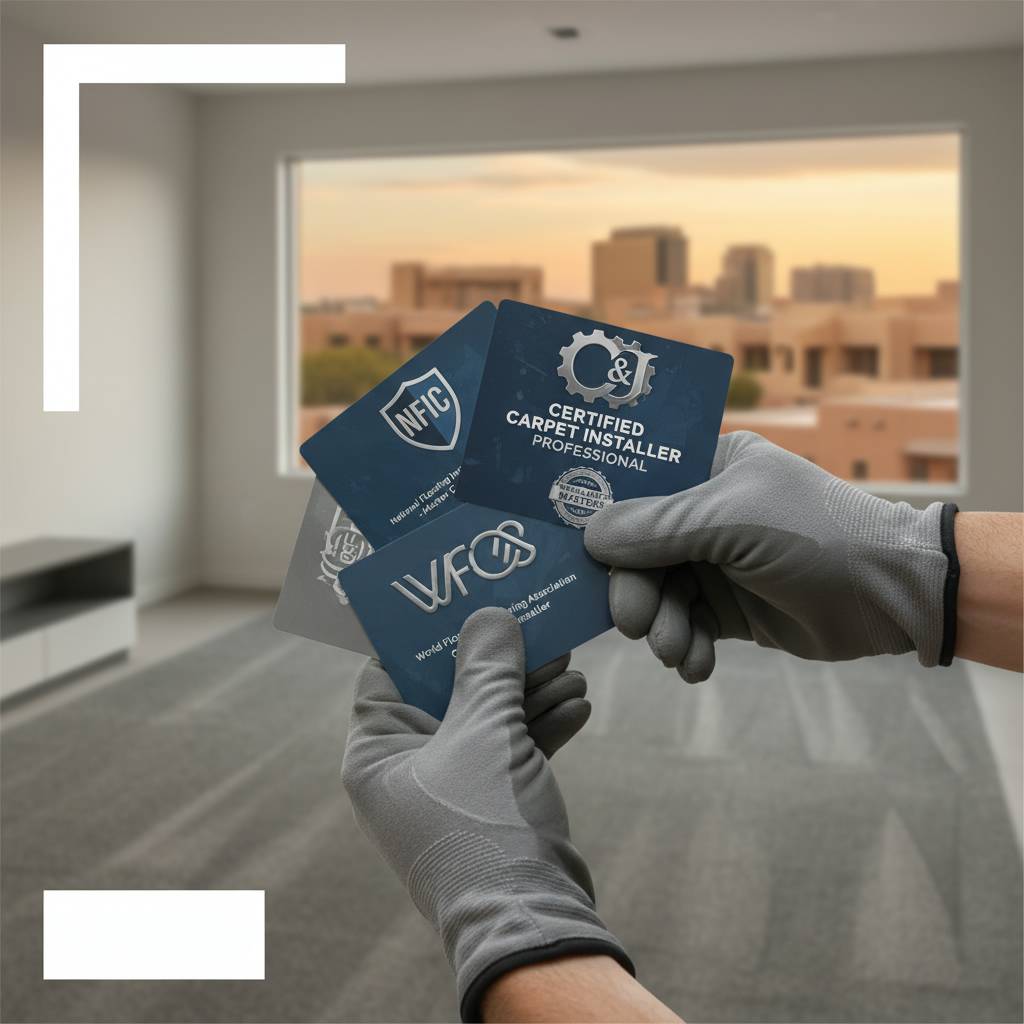 When researching carpet installers, prioritize a mix of technical, safety, manufacturer, and business credentials. Core items to verify include industry-recognized installer certifications, manufacturer authorization, state or local contractor licenses, insurance and bonding certificates, and relevant safety training such as OSHA or EPA programs. Each plays a distinct role in protecting your property and ensuring the work is done correctly.
IICRC credentials are widely respected in the flooring and cleaning industries. For carpet work, look for the Carpet Repair and Reinstallation credential or other IICRC designations that indicate hands-on training in seam placement, tackless strip installation, stretching, and repair methods. An IICRC-certified installer will be familiar with industry standards for tensioning, seam strength, and substrate preparation, which are critical to long-term performance.
Manufacturer Authorized Installer status is particularly important when warranty preservation matters. Many carpet warranties require installation by an approved installer; otherwise, a manufacturer may limit or deny coverage. Authorized installers receive product-specific training, know recommended adhesives and seam practices for that brand, and often have access to technical support from the manufacturer, which can save time if unusual issues arise during installation.
State or local contractor licenses demonstrate that an installer meets statutory requirements in your jurisdiction. Licensing typically involves proof of financial responsibility, minimum experience, and sometimes passing trade or business examinations. While licensing alone does not guarantee flawless work, it provides legal recourse and an administrative layer of consumer protection you will not have when hiring unlicensed individuals.
 Insurance and bonding protect you from liability if accidents or property damage occur during a project. Always request a certificate of insurance that lists general liability coverage and workers' compensation. A bonded contractor provides an additional safety net: bonds act like insurance for the customer, offering financial remedies if contractual obligations are not met or if the contractor abandons the job.
OSHA safety training, such as the OSHA 10 or OSHA 30-hour courses, signals a commitment to jobsite safety, especially on larger or commercial projects. For older buildings, EPA RRP (Renovation, Repair and Painting) certification is essential when work might disturb lead-based paint; it ensures containment procedures and testing protocols are followed to protect occupants. These credentials reduce the risk of regulatory penalties and health hazards.
Beyond safety, look for membership in recognized trade associations and specialty designations such as sustainability certifications. For example, CRI Green Label Plus relates to low-emitting carpets and adhesives and can be relevant for indoor air quality-conscious projects. Trade association membership indicates a contractor stays connected to evolving best practices and professional development within the flooring industry.
 Always ask for documentation before signing a contract. A professional company will readily provide scanned copies of certificates, photographs of credentials, and contact information for confirming agencies. When given certificates, check the issuing organization's website for registration numbers or an online verifier. If a certificate looks altered or lacks verification details, request additional proof, such as a training transcript or direct confirmation from the certifying body.
When confirming manufacturer authorizations, ask for the installer's manufacturer ID and verify it through the manufacturer's dealer or installer locator tools that many brands provide online. For insurance, contact the broker listed on the certificate to confirm active coverage and policy limits. For licensing, check your state or local licensing board; many jurisdictions maintain searchable databases showing active status, disciplinary actions, and bond amounts.
Using a simple script like these lines during initial calls helps standardize comparisons between bids and uncovers gaps you might otherwise miss. Requesting proof early also shows professionalism and reduces the chance of mid-project disputes related to warranty coverage or regulatory compliance.

| Credential | What it verifies | Project risk reduced |
|---|---|---|
| IICRC carpet credentials | Technical installation and repair training for carpets | Improper seam placement, poor stretching, premature wear |
| Manufacturer Authorized Installer | Product-specific training and warranty eligibility | Voided warranty, incorrect adhesives or seam methods |
| State/local contractor license | Legal authorization and minimal business standards | Unlicensed work, limited legal recourse |
| Insurance & bond | Financial protection for injuries and damages | Out-of-pocket liability for accidents or theft |
| OSHA/EPA training | Jobsite safety and lead-safe practices | OSHA violations, lead exposure, unsafe practices |
 There are several indicators that should prompt caution. If a provider is evasive about showing certifications, claims to be certified without naming the issuing organization, or provides only vague paperwork, consider that a warning sign. Likewise, an installer who refuses to provide insurance information or who pressures you to sign a contract without time to verify credentials is likely prioritizing speed over accountability.
Low-ball estimates can be tempting, but unusually low bids often reflect corners cut on materials, labor standards, or safety compliance. Ask detailed questions about low-priced proposals: who will perform the work, whether subcontractors are used, and what specific brand and quality of padding and adhesives are included. Written answers and verifiable documentation are the best defense against hidden costs and substandard results.
Also verify the installer's references and project photos. A solid history of recent, local projects with similar scope is more reliable than distant or outdated work. When possible, visit a project site or request a phone reference to discuss durability, communication, and whether the installer adhered to the agreed timeline and warranty obligations.
Hiring certified professionals can come at a premium, but that price often reflects the value of fewer callbacks, better material handling, and warranty support. Certified installers tend to work more efficiently because they follow consistent procedures and avoid costly rework. When comparing estimates, factor in the long-term savings from correct initial installation versus the immediate savings of an uncertified low bid.
Schedule flexibility can also be affected by certification status. Manufacturers' approved installers are sometimes booked further out because of high demand, particularly during peak seasons. If your timeline is tight, ask about interim options such as prioritizing critical areas or using certified crews for key steps while less technical tasks are completed by support staff under supervision. Good contractors will present transparent scheduling plans tied to credentialed personnel.
 A mid-size office renovated its reception and corridor with commercial-grade carpet intended to withstand heavy foot traffic. The building manager required manufacturer-authorized installation to preserve a 10-year performance warranty and insisted on proof of IICRC training and OSHA 30 cards for supervisors. The chosen installer demonstrated all credentials, provided a clear scope, and listed the manufacturer warranty by name. The result was a durable floor with minimal seam visibility and a warranty that covered a stain-related issue two years later, avoiding out-of-pocket repair costs.
This example illustrates how documentation and verification can translate into real financial and operational benefits. The additional time spent verifying credentials before the project began prevented disputes and created a direct line to manufacturer support when an issue arose-precisely the outcomes you want when risk reduction is a priority.
Start by compiling a short list of questions for prospective installers: Which certifications do you hold? Can you provide copies of certificates and insurance? Are you a manufacturer-authorized installer for the products I'm considering? What is your warranty and how is it supported? Asking these targeted questions up front simplifies comparisons and puts you in control of the selection process.

National Carpet Installation maintains industry certifications and can provide proof on request. Our team understands the practical difference between nominal credentials and those that directly impact project outcomes, and we are happy to walk you through verification steps. If you would like assistance vetting bids or confirming manufacturer warranty conditions, contact us for transparent support and documentation.
When you are ready to move forward, ask installers to include their certification numbers and a list of crew members who will be on site in the written contract. That makes subsequent verification straightforward and keeps everyone aligned on expectations, warranty responsibilities, and quality standards.
 To minimize hiring risk and ensure the best long-term performance for your carpet project, verify the credentials that matter most: technical, manufacturer, safety, and business-related documentation. If you prefer, let National Carpet Installation handle the verification and provide a certified installer who meets your project's requirements.
Call 505-555-7733 today to request certificates of insurance, see proof of training, or schedule a consultation with a certified installer. We will respond promptly, confirm credentials, and help you plan a reliable installation that preserves warranties and protects your investment.
Thank you for considering National Carpet Installation. We look forward to answering your questions and arranging certified installation on your timeline.