Carpet ripples and buckling are more than cosmetic annoyances. When carpet loses its flat, secure placement over the floor, it can trip household members, wear unevenly, and mask underlying issues such as moisture or subfloor movement. Addressing ripples early prevents larger repairs later and preserves the life of the carpet and padding beneath.
National Carpet Installation often receives calls from homeowners who assume a few waves in the carpet are harmless. In many cases those waves indicate a specific failure mode-improper installation, humidity changes, adhesive breakdown, or subfloor problems-that, if left unchecked, can escalate into permanent damage. A timely assessment clarifies whether a simple re-stretch or more extensive remediation is required.
 Recognizing the difference between minor wrinkling and significant buckling helps prioritize repairs. Minor ripples may appear as small waves near high-traffic areas or along seams. Buckling is typically more pronounced: raised ridges, loose edges by baseboards, or carpet that lifts when stepped on. Note whether the problem is localized or widespread across rooms.
Pay attention to associated signs that point to deeper causes: musty odors suggesting moisture, separation at seams indicating adhesive failure, or squeaky, uneven floors that hint at subfloor movement. Photographing the problem and noting when it first appeared (after installation, after heavy rain, or following a renovation) gives technicians data that speeds diagnosis and improves repair outcomes.
One of the most frequent causes is simple: the carpet was not stretched correctly during installation. Proper installation requires stretching the carpet across the room and anchoring it to tack strips along the perimeter. When installers skimp on power-stretching or fail to secure seams, the carpet can relax over time and form ripples. Incorrect pad choice can also allow the carpet to shift more readily.
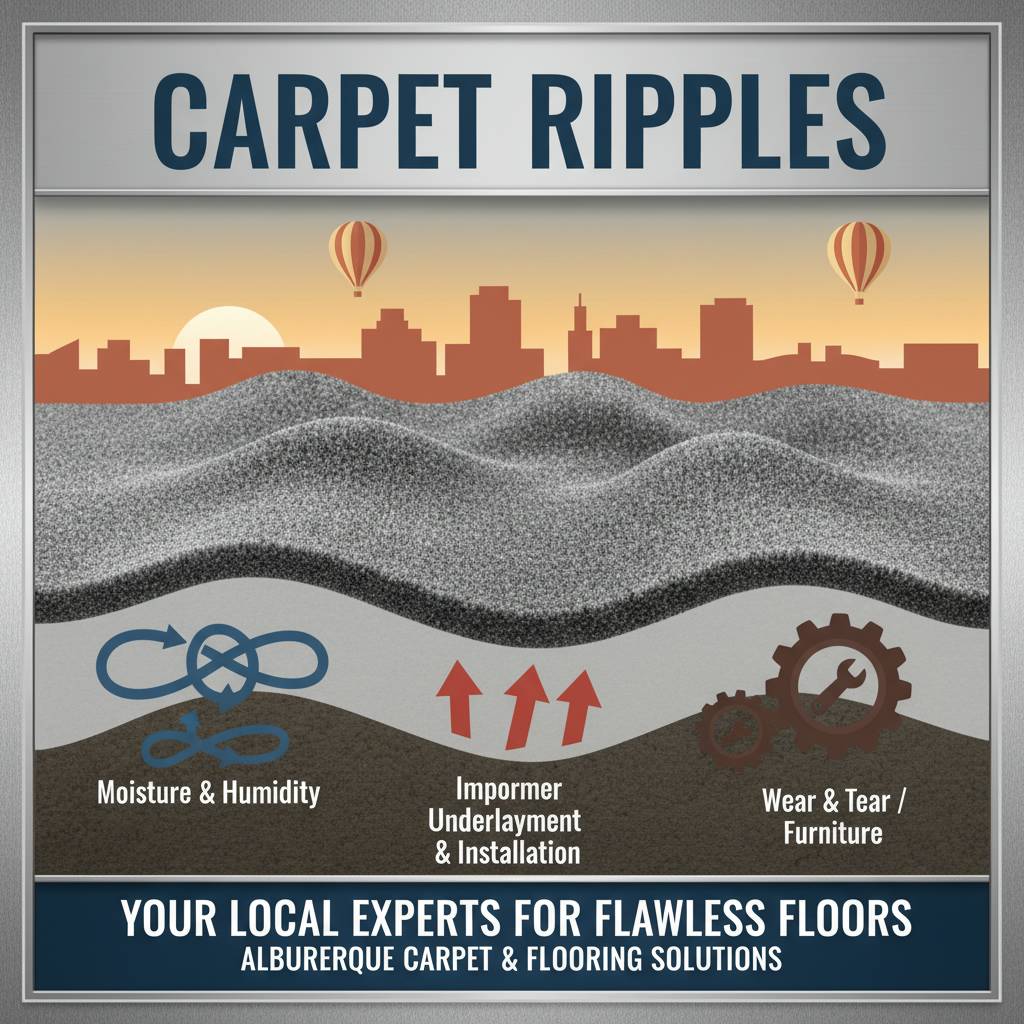
Carpet fibers and backing materials expand and contract with changes in moisture. High humidity or direct water exposure-such as flooding, leaks, or even prolonged dampness from poor ventilation-can cause the backing to swell and create waves. Conversely, drying without professional handling can lead to shrinkage in some materials, stressing seams and fasteners and causing uneven tension across the floor.
The surface beneath the carpet plays a crucial role. Uneven, warped, or water-damaged subfloors do not provide a stable base for carpet. Joist settling, loose plywood, or failed underlayment can create localized high spots or valleys that the carpet will drape over, leading to visible ripples or buckles. Subfloor repair is often necessary before any re-stretching will hold.
In certain installations the carpet is glued at seams or around the perimeter. Over time adhesives can fail from age, moisture exposure, or improper application, allowing the carpet to detach and ripple. Tack strips may also be damaged, corroded, or improperly installed, which reduces their ability to anchor the carpet securely to the floor edge.
Long-term wear concentrates stress in certain areas. Heavy furniture can compress padding or distort carpet backing, while constant foot traffic gradually loosens the tension across seams and edges. Older carpets and pads simply reach the end of their functional life and become more susceptible to ripples as the backing and glue lose resilience.
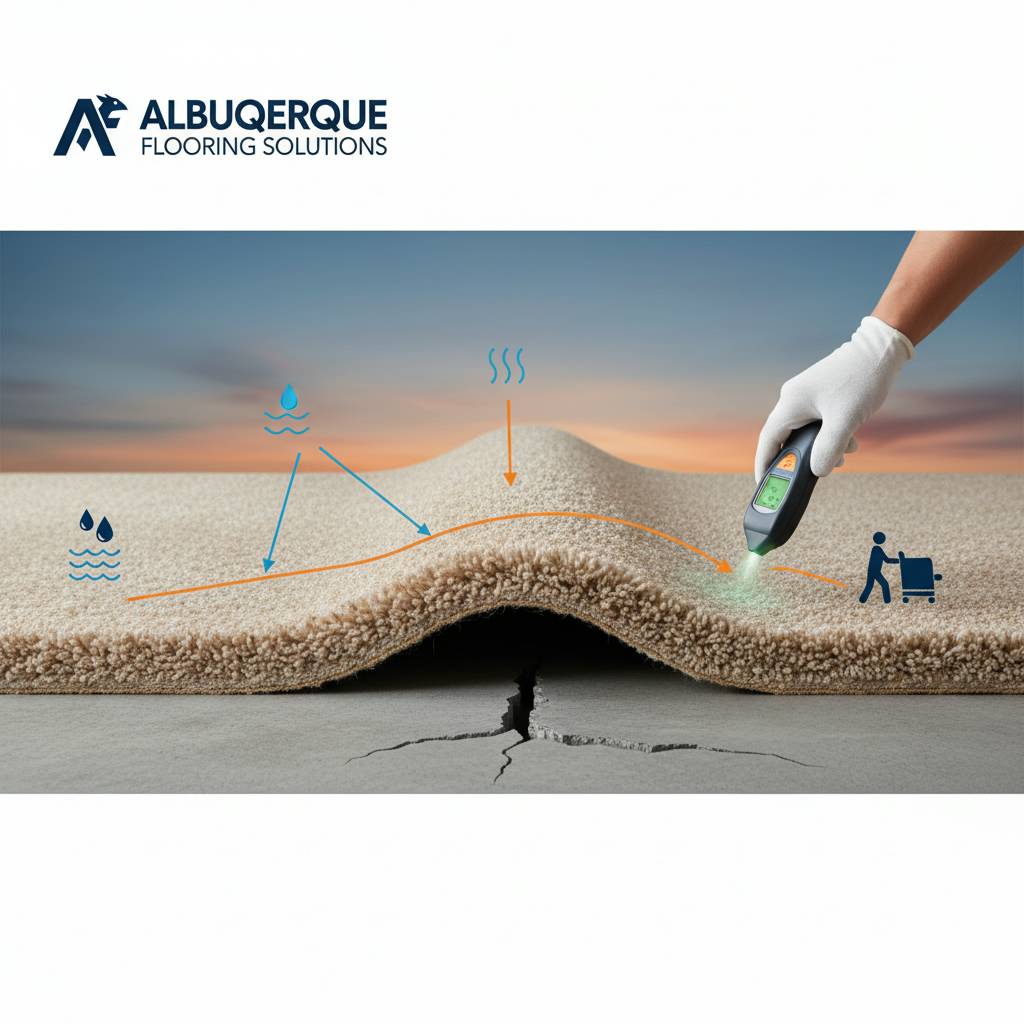 A careful inspection distinguishes surface symptoms from structural or moisture-related problems. Technicians typically start by lifting baseboards or removing a corner of carpet to inspect the backing, padding, and subfloor. Moisture meters, infrared cameras, and probe tests help determine whether water intrusion is present. If moisture is detected, remediation precedes any cosmetic repair.
Diagnosis also evaluates installation quality: seams, tack strips, and whether the original installation used power-stretching. Measurements of room dimensions and carpet orientation are taken to see if material shrinkage or improper cutting contributed. With this information, technicians recommend a targeted solution rather than a generic fix that might fail again.
 Repair depends on the underlying cause. For installation-related ripples, the most common remedy is power re-stretching: the installer detaches the carpet from the perimeter, uses specialized equipment to stretch the carpet taut, and re-secures it to the tack strip. When the pad is compressed or incorrectly specified, replacing the padding can significantly improve longevity and comfort.
If moisture or mold is involved, remediation must precede reinstallation. This can include drying, mold remediation, and subfloor repairs. Where subfloor movement or rot exists, replacing or reinforcing the subfloor is the only reliable long-term solution. In some cases-especially with older, worn carpet-full replacement is the most cost-effective choice.
| Service | Typical Cost Range |
|---|---|
| Power re-stretching (per room) | $75-$200 |
| Padding replacement (per room) | $100-$400 |
| Subfloor repair or replacement | $200-$2,500 |
| Moisture remediation / mold treatment | $300-$3,000 |
| Full carpet replacement (materials and installation) | $500-$5,000 |
These ranges depend on room size, material quality, local labor rates, and the severity of damage. A brief on-site inspection and quote from a reputable contractor like National Carpet Installation will clarify actual costs and avoid surprises. When comparing estimates, ask whether the quote includes pad replacement, subfloor prep, and removal of contaminated materials-omitting these steps can lead to recurring problems.
 Prevention starts with correct installation. Always hire installers who use power-stretching tools and properly sized tack strips, and insist on a carpet pad that matches the carpet weight and room use. A high-quality pad supports the carpet, maintains tension, and reduces wrinkling under stress. Keep installation receipts and warranties in case issues arise within the warranty period.
Control environmental factors inside the home. Maintain consistent humidity levels-ideally between 35% and 55%-with dehumidifiers or HVAC systems, especially in basements and coastal areas. Address leaks promptly and ensure good ventilation in rooms prone to moisture, such as bathrooms and laundry areas. Use furniture coasters or redistribute heavy loads when possible to avoid concentrated wear that can lead to buckling.
 Minor waves near a threshold or around a small area may be correctable with simple household tools, but DIY re-stretching is difficult without a power stretcher and experience with tack strips. Attempting to pull carpet by hand or using improvised methods can damage seams, cut backing, or create indentations that are costly to fix. For reliable, lasting results, professional re-stretching is the better option.
Call a professional if you observe large buckles, widespread rippling, signs of moisture, mold, or if the carpet was recently installed and failed prematurely. Professionals not only bring the right tools but also the diagnostic experience to determine whether pad replacement, subfloor repair, or moisture mitigation is needed before re-stretching. Technicians from National Carpet Installation will explain options, timelines, and costs so you can choose the most durable repair path.
Example 1: A homeowner noticed ripples in a living room that appeared after a heavy storm. Inspection revealed elevated moisture under the carpet and a wet, swollen subfloor. The long-term solution required moisture remediation and partial subfloor replacement followed by new padding and professional re-stretching. Treating the root cause prevented recurring buckling.
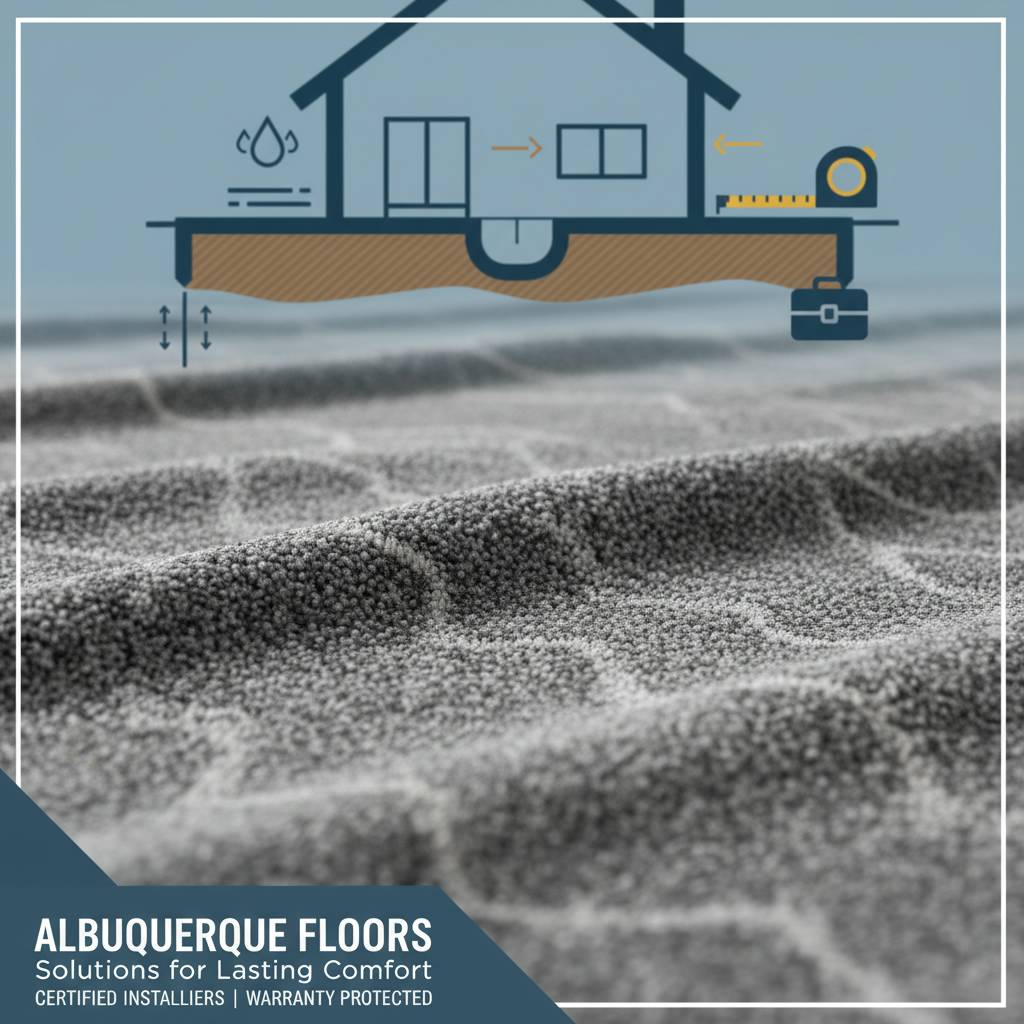
Example 2: A recently installed bedroom developed ripples within months. Technicians determined the installer had not power-stretched the carpet and had used an undersized pad. Re-stretching the carpet and upgrading the pad corrected the problem and extended carpet life without replacing the entire floor. This illustrates how proper installation practices matter more than the carpet's age in many cases.

When installed correctly with appropriate padding and environmental control, a carpet should remain taut for many years-often as long as the carpet's expected lifespan. Poor installation, moisture exposure, or subfloor problems are the common exception that reduces that timeline.
Most carpets can be re-stretched if the backing and seams are in good condition. If the backing has delaminated, or the carpet is excessively worn or brittle with age, replacement may be the only viable option. A professional inspection determines whether re-stretching will be effective.
Not always, but moisture is a frequent contributor to broad, persistent buckling because it affects both carpet backing and subfloor materials. Where moisture is present, failing to remediate it before repair often results in repeated issues.
If you're seeing ripples or buckles in your carpet, don't wait until the problem worsens. A short inspection can identify whether a simple re-stretch will fix the issue or if more extensive repairs are needed to prevent a recurrence.
For expert evaluation and a transparent quote, contact National Carpet Installation at 505-555-7733. Our team can diagnose the causes of ripples and buckling in carpet and recommend targeted, long-lasting repairs that protect your investment.
We're ready to help-reach out to National Carpet Installation today and get a clear plan to restore a safe, smooth floor in your home.