Carpet padding is often overlooked, but it plays a central role in how your floor feels, performs, and endures. A high-quality pad absorbs impact, reduces wear on carpet fibers, and improves insulation and sound control. Choosing an inadequate pad can make even an expensive carpet look and feel cheaper, while the right pad preserves appearance and extends useful life.
Beyond immediate comfort, padding affects long-term performance in measurable ways. It helps maintain proper carpet backing support, prevents premature crushing, and can even influence warranty eligibility. When you evaluate options, think of padding as an investment that protects the carpet and reduces replacement frequency over time.
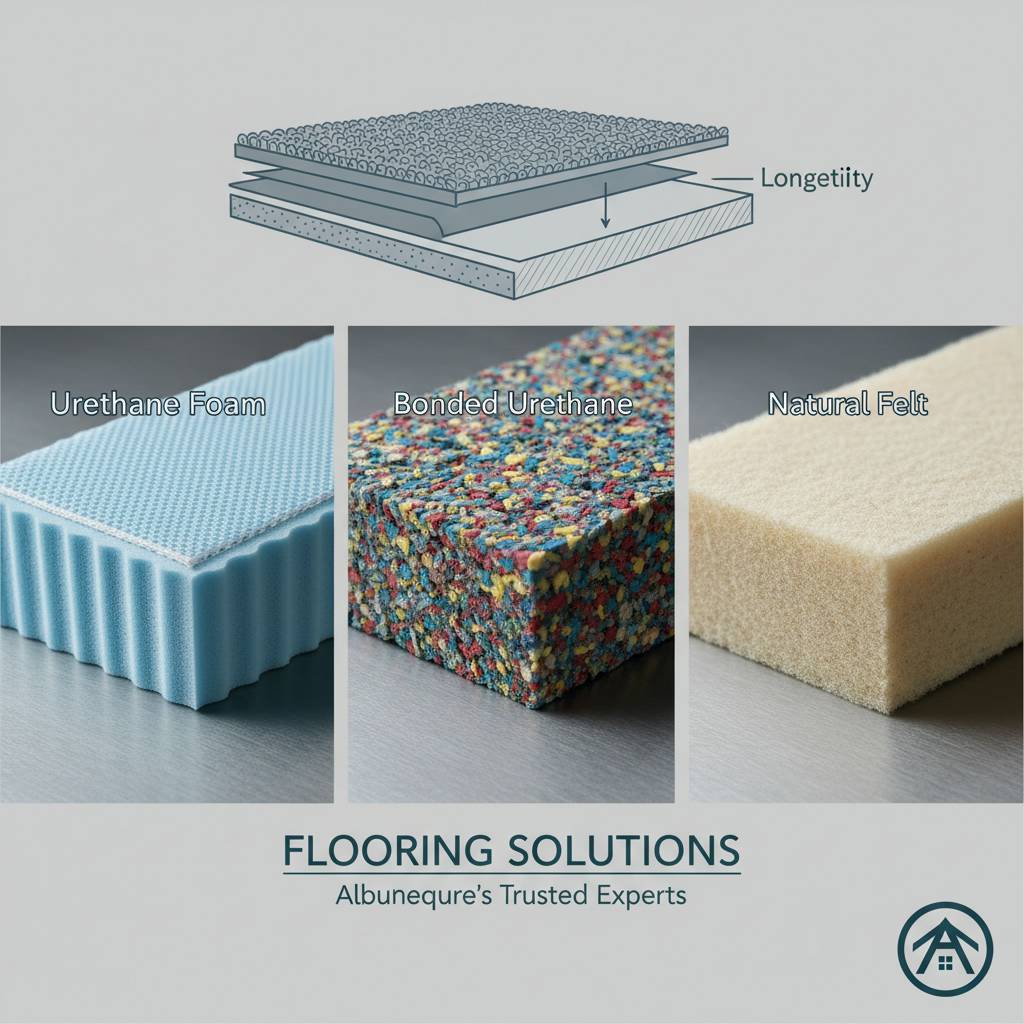 Different materials offer different benefits. Selecting the right chemistry and construction is a balance among durability, comfort, cost, and environmental preference. Below are the most common pad types you'll encounter and what to expect from each.
Rebond padding is made from recycled foam scraps bonded together and is widely used because it strikes a good balance between durability and cost. Rebond offers strong support under furniture and high-traffic areas and is often specified by carpet manufacturers for warranty compliance. It tends to be firm and resilient, which helps maintain carpet appearance over time.
Prime polyurethane foam delivers consistent cushioning and comes in a range of densities. It is lighter and easier to handle than rebond and can offer excellent comfort when the density is appropriate. Lower-density foams may feel plush but wear faster, while higher-density prime foams provide better long-term support.
Memory foam pads prioritize immediate comfort and conforming feel. They are pleasant underfoot but can compress faster in high-traffic areas unless manufactured with higher density. Specialty gel or layered foams attempt to combine resilience with pressure relief, but they are typically best for bedrooms or low-traffic living spaces rather than busy hallways or commercial areas.
Rubber pads, including bonded rubber made from recycled tires, offer excellent durability and moisture resistance. They compress minimally and are a strong choice under dense pile carpets or in places where you want a firm foundation. Natural fiber felt pads (wool or hair blends) are dense, eco-friendly, and provide excellent thermal and acoustic insulation, but they usually come at a higher price point.
Low-profile pads are thinner yet dense, designed for tight door clearances and modern carpet constructions. Specialty products such as moisture-resistant pads for basements and pads with antimicrobial treatments address specific installation needs. Always match specialty pads to the unique demands of the room and carpet type.
| Material | Typical Density | Typical Thickness | Best For | Pros | Cons |
|---|---|---|---|---|---|
| Rebond foam | Medium-high (approx. 6-8 lb/ft3) | 7/16" - 1/2" | High-traffic living areas | Durable, cost-effective, warranty-friendly | Heavier, less soft initially |
| Prime polyurethane | Varies (3-8 lb/ft3) | 1/4" - 3/4" | Bedrooms, living rooms | Comfortable, lighter weight | Low-density versions wear faster |
| Memory/specialty foam | Low-medium | 1/4" - 1/2" | Low-traffic comfort zones | Very cushioned feel | May compress in heavy use |
| Bonded rubber | High (8 lb/ft3) | 1/4" - 1/2" | Commercial or heavy-load areas | Stable, moisture resistant, long-lasting | Firmer, higher cost |
| Felt/natural fiber | High | 1/4" - 1/2" | Insulation, sound control, upscale installs | Great thermal/acoustic properties | More expensive |
 Carpet pad performance is governed by two related but distinct properties: thickness (how thick the pad is) and density (how much material is packed into a given volume). A thick low-density pad may feel plush initially but will compress quickly and fail to protect the carpet. Conversely, a thin high-density pad can provide excellent support and longevity despite its reduced thickness.
When evaluating options, prioritize density for longevity and support, and use thickness to tune comfort and floor height. Many carpet manufacturers specify a minimum density to maintain warranty coverage, so match pad density to both the carpet type and traffic expectations rather than choosing the thickest pad by default.
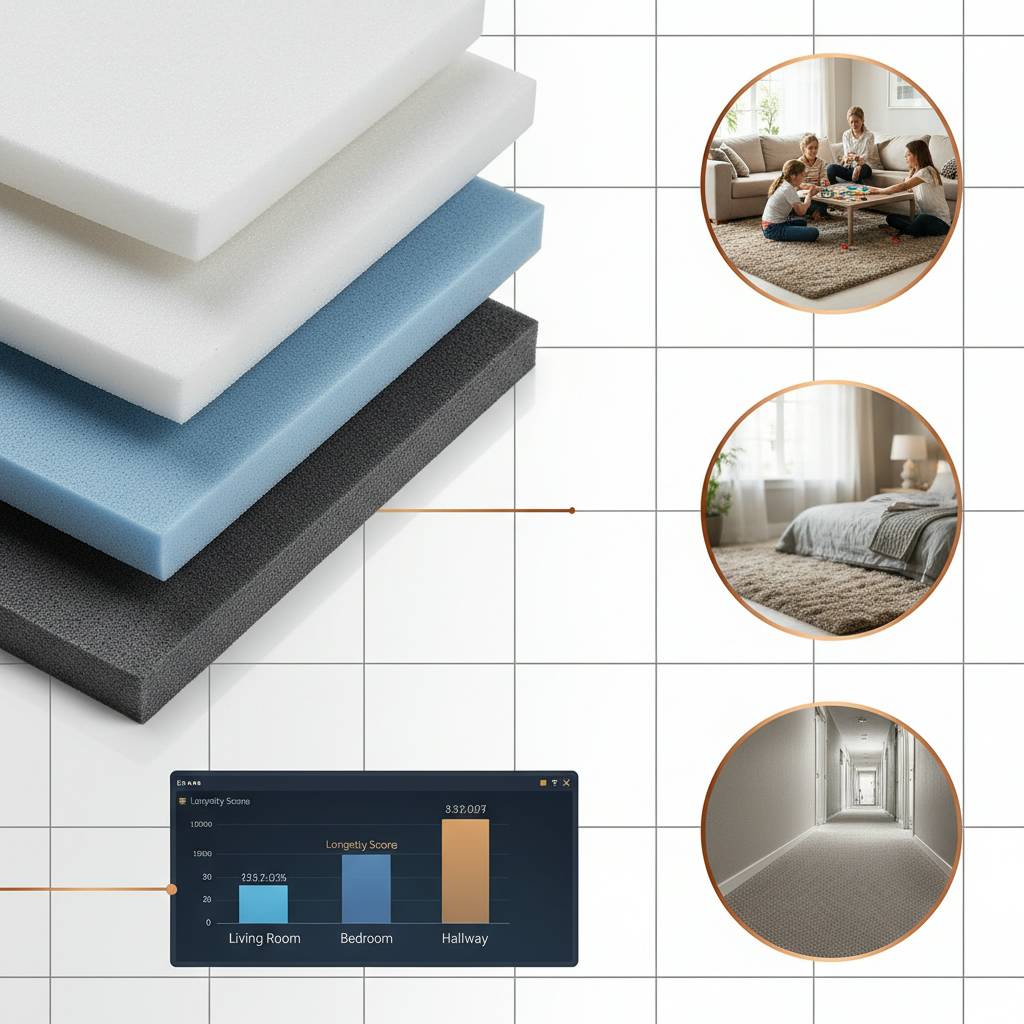 Each room has distinct demands: traffic patterns, furniture loads, moisture exposure, and acoustic needs should influence your choice. Below are practical recommendations that balance performance, comfort, and durability.
Cost varies by material and room size. For a typical room, high-quality pads and professional installation commonly run in the range of $75-$200, depending on material choice and thickness. Factor in total life-cycle value: a better pad can delay carpet replacement and reduce lifetime costs.
 Many carpet manufacturers tie their product warranties to specific padding requirements. Using the wrong pad can void important protections, so always check the carpet warranty and follow the recommended density and thickness. Professional installation ensures proper seam placement, timely acclimation, and secure attachment that will protect both carpet and pad performance.
Environmental considerations are increasingly important. Recycled-rebond options and natural fiber pads reduce landfill impact, while some prime foams are produced with lower-VOC formulations. If indoor air quality or sustainability is a priority, ask for eco-friendly certifications and material sourcing details when discussing options with your installer.
 Pads do not last forever. Typical service life depends on material and traffic levels, but most pads should be evaluated at the time of carpet replacement. Signs that pad replacement is necessary include visible crushing, unevenness underfoot, persistent odors, and rapid carpet matting even after cleaning. Replacing worn pad often restores carpet appearance and feel as effectively as replacing the carpet itself.
Regular maintenance helps maximize pad life: keep moisture out of carpets, use furniture coasters under heavy legs, rotate area rugs when feasible, and follow carpet cleaning recommendations that avoid saturating the pad. After spills, quick drying and professional extraction reduce the risk of pad deterioration and mold growth.
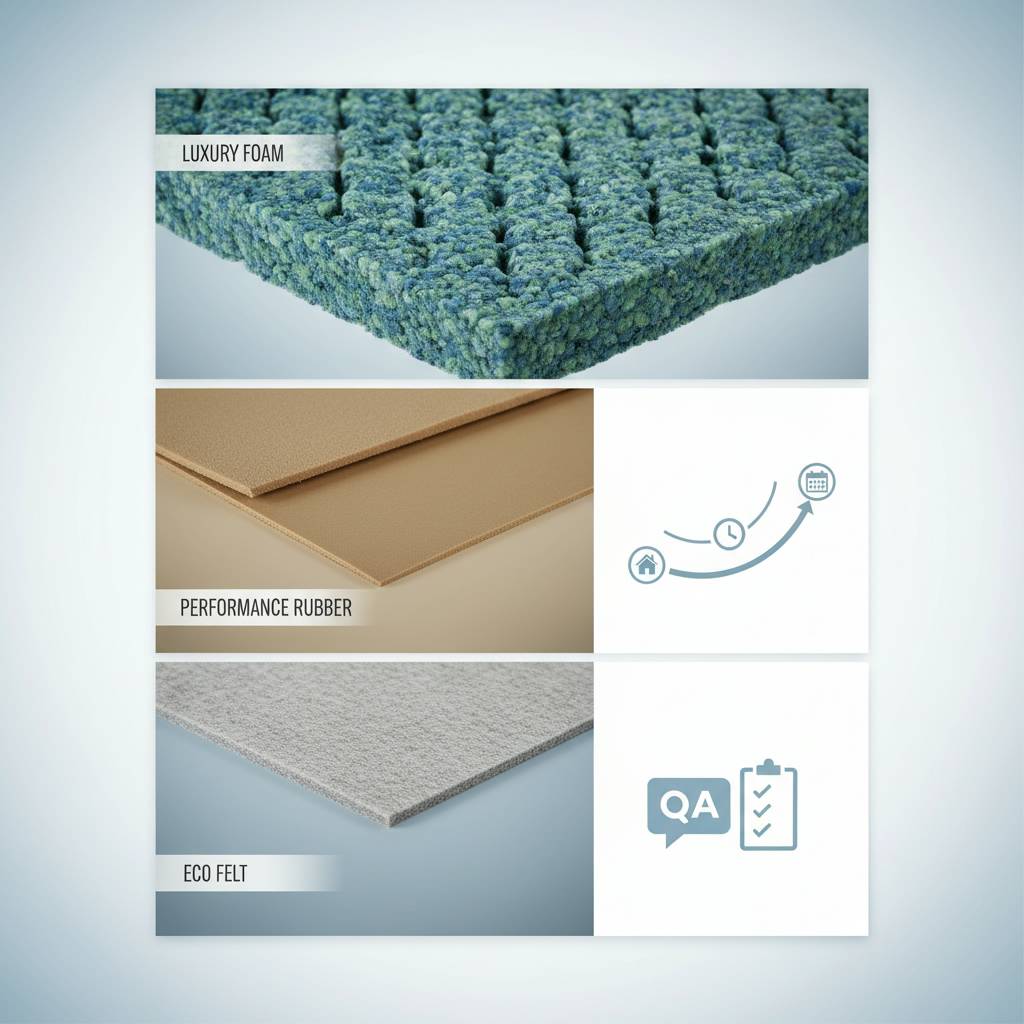
Density needs depend on carpet pile type and traffic. For busy areas and commercial-grade carpets, prioritize higher density (commonly referred to as medium-high to high). For bedrooms and low-traffic areas, mid-density options suffice. Always consult your carpet's warranty guidance for minimum density specifications.
Reusing pad is possible if it remains in good condition, hasn't compressed, and meets the new carpet's warranty requirements. However, if the pad shows signs of wear, mildew, or compression, replacement is recommended-new padding will optimize appearance, comfort, and longevity.
Not necessarily. Thickness increases plushness up to a point, but density determines how well the pad resists compression over time. A thin, dense pad may outlast a thicker, low-density pad and maintain better carpet support. Choose thickness in concert with density to meet both comfort and durability goals.
Yes. Dense felt pads and some specialty acoustic pads are designed to reduce impact and airborne noise. These are particularly useful in multi-story buildings, home theaters, and apartments where sound transfer is a concern.
 Approach your selection methodically: first, review the carpet manufacturer's padding recommendations and warranty requirements. Second, assess room-by-room needs-traffic, furniture loads, moisture, and acoustics. Third, weigh material characteristics against budget and environmental preferences. Finally, consult a qualified installer who can recommend specific products and confirm door clearances and transitions.
If you're unsure which option best balances comfort and longevity, request sample pieces and test them in the actual room. Walk on them with furniture in place or simulate traffic to see how the combination performs. Small upfront testing saves time and expense later by ensuring long-term satisfaction.
A homeowner installed a mid-range carpet with a low-density pad and noticed matting and shorter pile life within two years. They replaced the pad with a medium-high density rebond product and re-stretched the carpet. The result was improved carpet resilience, less visible wear, and extended warranty protection-demonstrating how the right pad can significantly affect durability and appearance.

That example highlights an important principle: a modest additional investment in pad quality often yields outsized returns in carpet performance and lifespan. Consider pad selection part of the whole-floor purchase decision rather than an afterthought.
Choosing the right carpet pad requires matching technical specification to everyday use. National Carpet Installation evaluates your rooms, checks manufacturer warranty requirements, and recommends pad materials and densities that deliver both comfort and longevity. If you want, ask for NCI when scheduling a consultation for a personalized recommendation.
For pricing, availability, and product demos, contact our team. We can provide sample swatches, install quotes, and explain how specific pads interact with the carpets you are considering.
Ready to improve carpet performance? Call 505-555-7733 to discuss pad options, get a quote, and schedule an on-site evaluation. Our experts will help you choose the best padding solution to protect your investment and enhance comfort.
Thank you for considering National Carpet Installation. We look forward to helping you select the ideal carpet padding for lasting comfort and value-call 505-555-7733 today to get started.